Wednesday May 22 2013
Videos
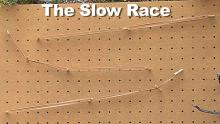
The Slow Race A challenge that combines science, engineering, and creative thinking.
Cloud Formation, Part 1 How clouds form, part 1
Making a Screamer An obnoxious...I mean interesting way to study sound.
Obedient Coin Can you get the coin out from under the glass without touching it? Of course you can!
Strange Flame, part 2 The answer to part 1.
Scientific Thought and Creative Thinking, Part 1 A challenge in creative, scientific thinking.
Scientific Thought and Creative Thinking, Part 2 Part two of Creative Thinking
Scientific Thought and Creative Thinking, Part 3 Part three of the Creative Thinking series
The Knuckle Trick The answer to the Knuckle Trick challenge
A Model of the Water Cycle Make a scientific model of the water cycle.
Science Friction A simple friction challenge that might surprise you.
How Heat Moves Learn the three ways that heat energy can move.
Sunglass Science: Birefringence This time we will explore things that are usually invisible, revealing new things about the world around us.
Sunglass Science: Polarized Light Grab your shades for a different way of seeing the world around you.
Water in a Glass, Part 3 The answer to Part 2, and a fun "science trick."
Water in a Glass, Part 2 The answer to part 1, and a new challenge.
Water in a Glass, part 1 What really keeps the water inside this inverted glass?
Lighting a Bulb With a Balloon Can you really light a lightbulb with a balloon? Of course you can!
Science of Credit Cards How is the information stored on a credit card, and why does putting a plastic bag over an old card make it scan better?
Laser Projection Microscope Turn a $5 laser pointer into a projection microscope!
Pick a String Pull downwards on the string, and use science to cause it to break either above or below the book.
Smoke Rings A simple way to produce beautiful smoke rings.
Strengthening the Dollar How can you make a dollar bill stronger? With science!
Coins Through a Hole Put a coin through a hole that is smaller than the coin, without tearing the paper!
Making Water Wiggle Make a stream of water move without touching it.
Why Wet Things Turn Dark Why does making something wet cause it to look darker?
Relative Motion How fast can you throw a piece of paper?
Oxygen? No! It is amazing how many books get this one wrong!
Looking for Rainbows The amazing science of rainbows.
Heartless Plants How do plants move water and food without a heart for a pump?
Why Things Go Bang Why do fire crackers make such a loud sound?
Ice and String Can you lift an ice cube out of a glass of water with a string? Try it and see.
Measuring Lightning Use the Flash-Bang method to measure how far away the bolt was, and how long it was.
Noisy String Learn about sound while annoying.. I mean amusing your friends.
Hanging a Hammer Can you balance a hammer, a ruler, and some string on the edge of a table? Of course!
Planets and Pennies Try this easy way to visualize how gravity differs from planet to planet.
Bottle Tones, Part 2 The solution to the Bottle Tones video.
Bottle Tones, part 1 How does mass relate to pitch?
Candles in a Jar, Part 2 The answer to the last video's challenge.
Candles in a Jar Which will go out first, the tall candle or the short one?
Ice and Soda Try this old trick for pouring soda with less foam.
Wrong Way Balloon Why do balloons act crazy in your car?
Doppler Effect Why does the sound of a car change as it passes you?
Hear the Ocean? Why do you seem to hear the ocean inside a sea shell?
The Science of Pizza Is the cheese on a pizza really hotter than the crust?
The Right Answer Sometimes the right answer is not the only answer.
Half a Water Balloon Why is half a water balloon different from a full one?
Got the Red Green Blues Does your TV really only have three colors?
Preview of Electricity DVD Preview of Electricity DVD
About Microwaves Compare the way that a microwave oven heats water and other substances.
Producers Learn about the lifeforms that make up the base of the foodchain.
The Compass and Magnetic Fields Use the compass you constructed in Video 149 to explore magnetic fields, from electric wires to your kitchen cabinets.
Grass Whistle A fun science trick that my grandfather taught me.
Emergency Glasses Learn how to make quick, easy, emergency eyeglasses.
Make a Compass Construct a compass with household materials.
The Singing Glass Turn a drinking glass into a musical instrument.
Floating Cups Help figure out the science behind this simple trick.
The Leyden Jar Learn to construct a 25,000 volt Leyden Jar from materials found around the house. This dramatic, yet safe, demonstration is a
The Science of Flutes Learn about the science of sound as we see how a flute works.
Tricky Bottle Learn the science behind the Tricky Bottle!
Why We Sweat Why do people sweat?
HappyTone Launch
Mirage What is a mirage, and why do they happen?
Going Through a Card Cut a hole in a 4X6 inch index card that is large enough for you to crawl through.
Flame Color Why are candle flames yellow?
Cartesian Diver Make a diver that will rise and fall at your command, if you know the science.
Mass and Weight Why are mass and weight so confusing?
Matter What is matter?
Light as Air When we say that something is as light as air, what does that really mean?
Strange Flame, part 1 Can you figure out why the flame moves backwards?
Radioactive What does it mean when we say that something is radioactive?
The Cloud Chamber A cool way to see evidence of subatomic particles.
The Fire Diamond What does it take for something to burn?
Mobius Space Can an empty space have only one side?
Magic Coin Use science to make a coin seem to magically rise from a matchbox.
A Color You Can't See Use your cell phone to see a color you can't see
Balloon on a Stick Learn the science behind this classic demonstration.
Dry Ice Learn some fun tricks with dry ice as we explore the science of sublimation.
A Watched Pot Who would think that there could be so much science in a pot of boiling water?
Bird on a Wire How can birds sit on powerlines without being shocked?
Egg States When is a change of state not really a change of state?
Spoon Bells Use simple science to make spoons sound like church bells.
Making Craters Make your own craters, and compare them with photos of the real thing.
Density Column How can something sink and float at the same time?
Changing the Speed of Light Can you really change the speed of light? Of course you can!
Recycle With Americans producing 600,000 tons of garbage a day, it is important to look at what we throw away.
Spoon on Your Nose Use science to stick a spoon to your nose.
The Pool, the Boat, and the Anchor, part 2 The answer to video 111
The Pool, the Boat, and the Anchor Do you really understand why things float and sink?
Simple Circuit Construct a simple circuit and use it to test conductors and insulators.
Introduction to Light Emitting Diodes Using LEDs as a way to get started learning about electricity.
The Versorium Construct a simple device for detecting static charges.
Solar Power A look at one of the world's largest solar power plants to learn about reflection and refraction.
White Foam If bubbles are clear, then why are soap suds white?
Wax and Wood, part 2 The answer to the challenge. Did you get it right?
Wax and Wood, part 1 We start by putting wood and wax into water, and watching them separate. The challenge is to get them to change places.
Wonderful Water Because it is so common, we forget how chemically bizarre water is.
Iron Cereal What do they put into breakfast cereal to give you your daily requirement of iron?
The Bullroarer Make this simple, science toy to learn about sound, while making sounds to annoy,..I mean amuse
 your family.
Static Charges An introduction to induction.
Why Wet Things Won't Burn What is it about water that keeps things from burning?
The Hottest Part of the Flame? What is the hottest part of a flame? It may not be where you think it is.
Chromatography Can you tell which pen was used to write a message? Of course you can, if you know the science of chromatography.
White Balance Have you ever taken a photo that turned out very yellow or with a blue tint? Now you will know why.
More Science of Balance Make this fun, science toy, and learn more about how things balance.
Raw Egg or Boiled? Can you tell the difference between a raw egg and a boiled egg, without breaking the shell? Of course you can, if you know the s
The Science of Balance Understanding center of gravity and base can make it easier to balance.
Light Speed Chocolate Use chocolate and your microwave oven to measure the speed of light.
Microwave Chocolate Combine science and chocolate to learn how a microwave oven works.
Air Space How many cotton balls can you fit into a full glass of water?
Ice Cream Science Even in the desert, you can make a cold, tasty snack with some common items and a little science.
Mystery of the Glassy Tube How quickly can you figure it out?
Identifying Minerals Using simple tests such as luster, hardness, and cleavage/fracture, you can identify most common minerals.
Floating Bubbles Float bubble on a layer of invisible gas.
Bernoulli Effect A simple challenge that does not work the way you would expect.
Sorting Salt and Pepper Can you mix salt and pepper and then sort them out again? Of course you can!
The Old Tablecloth Trick Simple science behind a famous science trick.
High Bounce Bounce a tennis ball higher than your house, just by dropping it.
Heating a Balloon Can you really use a candle to heat water in a balloon without popping it?
Crushed Can How much air pressure is pushing on you at this moment?
Mobius Strip Explore the science of topology with scissors and a piece of paper.
Science Photos
Science Photo of the Day #851Energy does not just appear out of nowhere, so the potential energy of the lake water had to come from some other energy source.
Science Photo of the Day #850I photographed this oil refinery in New Mexico. How do they make gasoline from crude oil?
Science Photo of the Day #839This raven flies back and forth along the cliff behind our house all day long. Why does it fly beside the cliff instead of out
Science Photo of the Day #838I took this photo this morning while making the hike to the mailbox. What direction was I facing?
Science Photo of the Day #832I found these interesting marks in a tire track in our driveway. What produced them?
Science Photo of the Day #816I noticed that as things warm up, the snow often melts first around the base of plants. Why?
Looking at Changes
Science Photo of the Day #806The temperature this morning was 8° F. When I looked at the ice in our birdbath, it had a large lump sticking up on the right s
Science Photo of the Day #800Is boiling the same thing as evaporation? If not, what is the difference?
Science Photo of the Day #795How is the formation of frost different from most other kinds of ice?
Science Photo of the Day #791With the cold weather, a large number of mule deer have moved into the canyon. Why are their eyes glowing in this photo?
Science Photo of the Day #784Seconds after I took the previous photo, I took this one of the same bird. Notice that the Hummingbird's throat has changed col
Science Photo of the Day #776Most people have seen clouds that let spotlights of sunlight shine through. Although it is a familiar sight, most people don't
Science Sound of the Day #2What is making this sound?
Science Photo of the Day #754Could you accurately measure the mass of an object in free fall, where its weight did not register at all? If so, how?
Science Photo of the Day #752Does adding heat to something always make it hotter?
Science Photo of the Day #751What is wrong with this scale?
Science Photo of the Day #750Refraction causes the handle of the spoon to appear to be broken at the surface of the water. What causes refraction?
Science Photo of the Day #744Looking back in history, it has not been that long since people relied on the Sun and fire as sources of light. Who invented th
Science Photo of the Day #743Incandescent light bulbs transform electrical energy into light and heat energy. With a normal incandescent bulb, what percenta
Science Photo of the Day #741This is a clear pool of water. What caused the strange dark spots on the bottom?
Science Photo of the Day #737These are electric cells (not batteries.) From left to right, the sizes are AAA, AA, C, and D. All four produce the same volta
Science Photo of the Day #735These needle shaped ice crystals were sticking up out of the ground. How did they form?
Science Photo of the Day #733We can use wind energy to produce electricity, but where does the wind get its energy?
Science Photo of the Day #727For many years, educators taught about the Fire Triangle, showing that for something to burn, it needed fuel, heat, and oxygen.
Science Photo of the Day #721When you mix cornstarch and water, you get something that many science sites call Oobleck. Under pressure, it feels like a soli
Science Photo of the Day #719While many parts of Death Valley are below sea level, there are places where the ground is exactly at sea level. If you compared
Science Photo of the Day #14Why is this Blue Jay blue?